
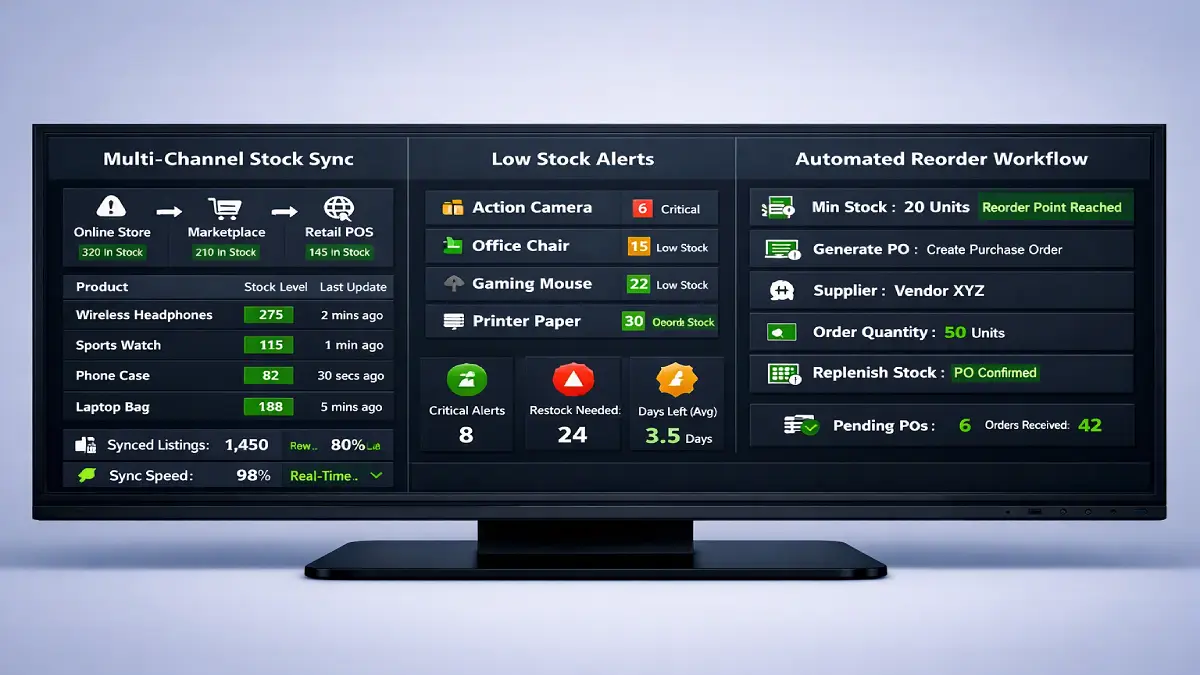
Verdict: When auditing cloud stock management software, retail operators discover that manual spreadsheet tracking is the leading cause of dead stock and overselling. High-velocity merchants must transition to a centralized cloud inventory management platform. Solutions like Katana or Zoho Inventory automatically deduct stock quantities across Amazon and Shopify the exact second a sale occurs, while pushing automated reorder alerts to purchasing managers before stockouts trigger.
14-Day Free Trial / No Credit Card Required →
| Platform | Core Strength | Base Pricing | ROI Verdict | Action |
|---|---|---|---|---|
| Katana Cloud | Live Sync & Purchasing | $179/mo | Elite automated reorder point logic and seamless multichannel eCommerce syncing. | Try Free (14 Days) → |
| Zoho Inventory | SMB Cost-Efficiency | $29/mo | Highly affordable for standard retailers requiring integrated accounting ledgers. | Start Free Trial → |
| Sortly | Visual Asset Tracking | $49/mo | Best for internal company supplies and IT asset management via mobile barcode scanning. | View Pricing → |
Multichannel API Sync and Polling Delays
The primary architectural flaw in cheap stock software is relying on delayed “API polling” instead of real-time webhooks. If your software only pulls data from Shopify every 15 minutes, a sudden influx of orders will cause you to sell stock you no longer possess. Enterprise-grade cloud platforms maintain localized safety stock logic, reserving inventory instantly to prevent catastrophic overselling and account suspensions on marketplaces like Amazon.
Scaling a multi-node operation also requires stringent fulfillment rules. Once an order is cleared, your ecosystem should push pick-and-pack instructions straight to a dedicated cloud warehouse management system. This guarantees that your digital stock ledger perfectly mirrors the physical inventory sitting on your shelves.
Automated Reorder Points and Dead Stock Analytics
A reactive purchasing strategy destroys cash flow. You cannot wait for warehouse staff to notice empty bins. Professional stock control systems ingest historical sales velocity and vendor lead times to calculate dynamic reorder points. When SKU levels drop below this threshold, the software auto-generates a Draft Purchase Order, requiring only a single click from the procurement manager to execute.
- FIFO vs. Moving Average: Ensure your chosen platform supports strict First-In, First-Out (FIFO) cost tracking to maintain accurate Cost of Goods Sold (COGS) reporting for tax compliance.
- Dead Stock Identification: Dashboards must instantly flag aging inventory that hasn’t moved in 120 days, allowing you to liquidate capital before storage fees compound.
Logistics Handoff and Delivery Tracking
Stock management does not end when the box is taped shut. If your B2B distribution model utilizes an internal delivery network, your inventory platform must communicate seamlessly with your fleet management software. Once the stock is loaded onto the delivery vehicle, the inventory asset account is formally credited, and liability shifts to the logistics team until final proof of delivery is obtained.
Frequently Asked Questions (Real User Audits)
Do cloud stock systems require specialized barcode hardware?
No. Modern SaaS platforms like Katana and Sortly offer native iOS and Android apps. Your warehouse staff can perform physical stock cycle counts and verify incoming purchase orders using the built-in cameras on standard company smartphones.
How do these systems handle negative inventory?
Top-tier cloud software actively prevents negative stock balances by locking the fulfillment sequence if physical counts hit zero. Bypassing this safety feature corrupts financial ledgers and completely breaks moving average cost calculations.
Is Zoho Inventory better than Katana?
Zoho Inventory is excellent for traditional buy-and-sell retailers looking for deep integration with Zoho Books. Katana outperforms Zoho significantly if your business model involves any light manufacturing, kitting, or multi-level bill of materials (BOM) tracking.
Software Evaluation Data (Schema Profile)
- Software Category: Cloud Stock Management Software
- Competitors Evaluated: Katana Cloud, Zoho Inventory, Sortly
- Primary Challenge: Overcoming delayed API polling and manual reorder point calculations.
- Average Starting Price: $29 – $179 USD/Month
- Market Rating: 4.6 / 5.0 (Verified G2 Retail Operations Reviews)
Disclaimer: Feature availability, API throttling limits, and pricing are based on independent B2B audits as of Q3 2026. Verify trial terms directly with vendors prior to integrating with live sales channels.