
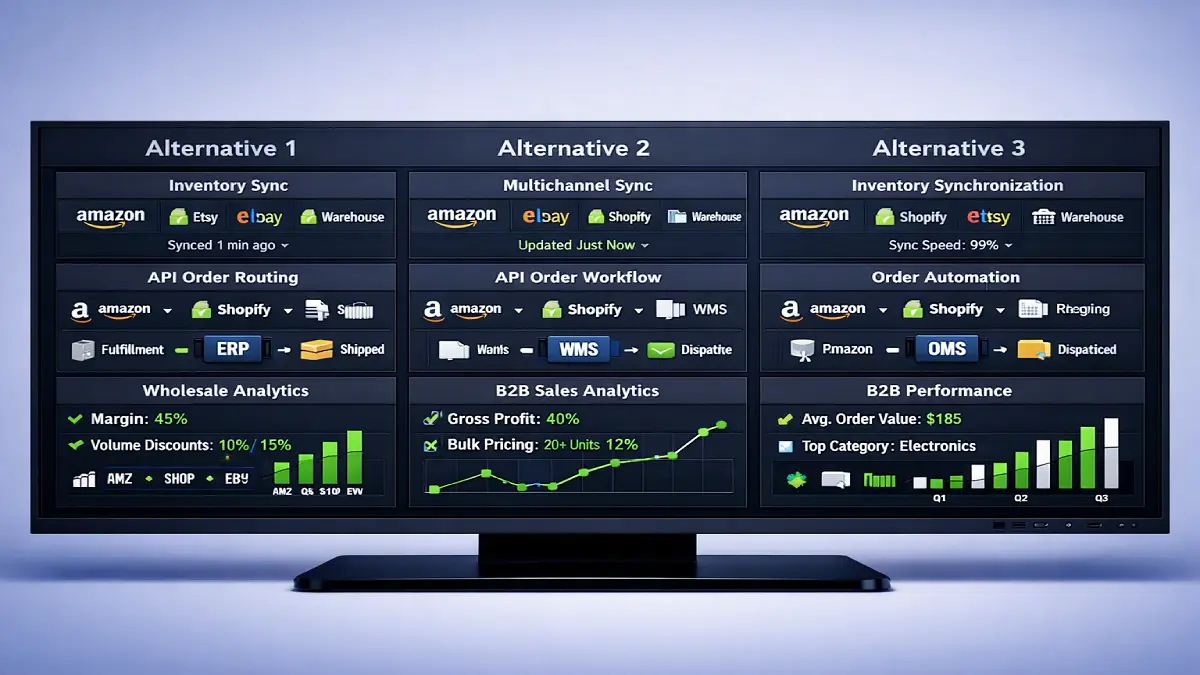
Verdict: When auditing a viable alternative to Linnworks, operations managers consistently cite enterprise bloat, severe API bottlenecks, and punitive onboarding costs as the primary drivers for migration. High-volume merchants require a cloud inventory management platform that synchronizes multi-channel Shopify and Amazon orders without requiring a dedicated IT department. Platforms like Katana or Cin7 Core deliver superior order routing and visual manufacturing controls at a fraction of Linnworks’ enterprise quote tier.
14-Day Free Trial / No Credit Card Required →
| Platform | Core Strength | Base Pricing | ROI Verdict | Action |
|---|---|---|---|---|
| Katana Cloud | Agile Omnichannel Sync | $179/mo | The ultimate Linnworks substitute for D2C brands blending eCommerce with light manufacturing. | Try Free (14 Days) → |
| Cin7 Core | B2B EDI Integrations | ~$349/mo | Unmatched wholesale architecture. Replaces Linnworks seamlessly for complex B2B routing. | View Pricing → |
| Veeqo | Free Amazon Shipping | Free | Amazon acquired Veeqo. Best for strict FBA/FBM sellers prioritizing shipping discounts. | Start Free Trial → |
Escaping the Enterprise Implementation Trap
Linnworks holds a strong market share among enterprise retailers, but its architecture is fundamentally rigid. B2B audits reveal that the platform often requires third-party consultants to map standard XML feeds, resulting in onboarding processes that stretch beyond four months and cost upwards of $10,000 in non-refundable setup fees. Smaller brands scaling rapidly cannot afford this friction.
When comparing a modern cloud based order management system against legacy tools, the differentiator is time-to-value (TTV). Software like Katana offers plug-and-play webhook connections to Shopify, WooCommerce, and QuickBooks Online, allowing operations directors to launch and validate their tech stack in a matter of days.
Multichannel API Sync and Overselling Risks
A primary failure point with bloated software is delayed API polling. During flash sales, if your inventory software only checks Amazon stock levels every 20 minutes, you will oversell items you do not possess. This immediately damages your seller rating and triggers account suspensions.
- Real-Time Buffer Logic: Superior platforms maintain localized “safety stock” buffers and push immediate API payloads to all connected sales channels the exact second a unit is purchased.
- Automated Reorder Points: Stop relying on manual spreadsheets. Cloud MRPs dynamically generate draft purchase orders based on moving average sales velocities.
Logistics Handoff and Fleet Routing
Inventory management terminates when the physical product is dispatched. A common weakness in Linnworks deployments is the disconnect between the warehouse ledger and internal delivery networks. Modern alternatives allow for seamless API handoffs directly into your fleet management software.
As soon as a warehouse worker scans a package into the delivery truck, the system marks the inventory as dispatched and updates the final-mile telematics system. This eliminates dual data entry and provides B2B clients with precise, real-time proof of delivery.
Frequently Asked Questions (Real User Audits)
Is Veeqo a good alternative to Linnworks?
Yes, if you primarily sell on Amazon. Veeqo is owned by Amazon and is completely free to use. It offers excellent shipping label discounts and multi-channel sync, but lacks the deep B2B wholesale and manufacturing controls found in Katana or Cin7.
Does Katana integrate directly with Amazon FBA?
Yes. Katana connects natively to Amazon (FBA and FBM) alongside Shopify, allowing merchants to centralize their retail inventory while maintaining precise raw material controls for assembled products.
Why do users migrate away from Linnworks?
User reviews consistently highlight three migration triggers: aggressive contract price increases upon renewal, a highly dated user interface that requires excessive clicking, and inadequate customer support for non-enterprise tiers.
Software Evaluation Data (Schema Profile)
- Software Category: Multichannel Inventory & Order Management
- Competitors Evaluated: Katana Cloud, Cin7 Core, Veeqo, Linnworks
- Primary Challenge: Bypassing expensive enterprise onboarding and rigid API polling.
- Market Rating (Katana): 4.8 / 5.0
- Market Rating (Linnworks): 4.5 / 5.0
Disclaimer: Pricing structures and API capabilities are based on independent B2B audits as of Q3 2026. Always verify onboarding SLAs and trial conditions directly with the software vendor.