
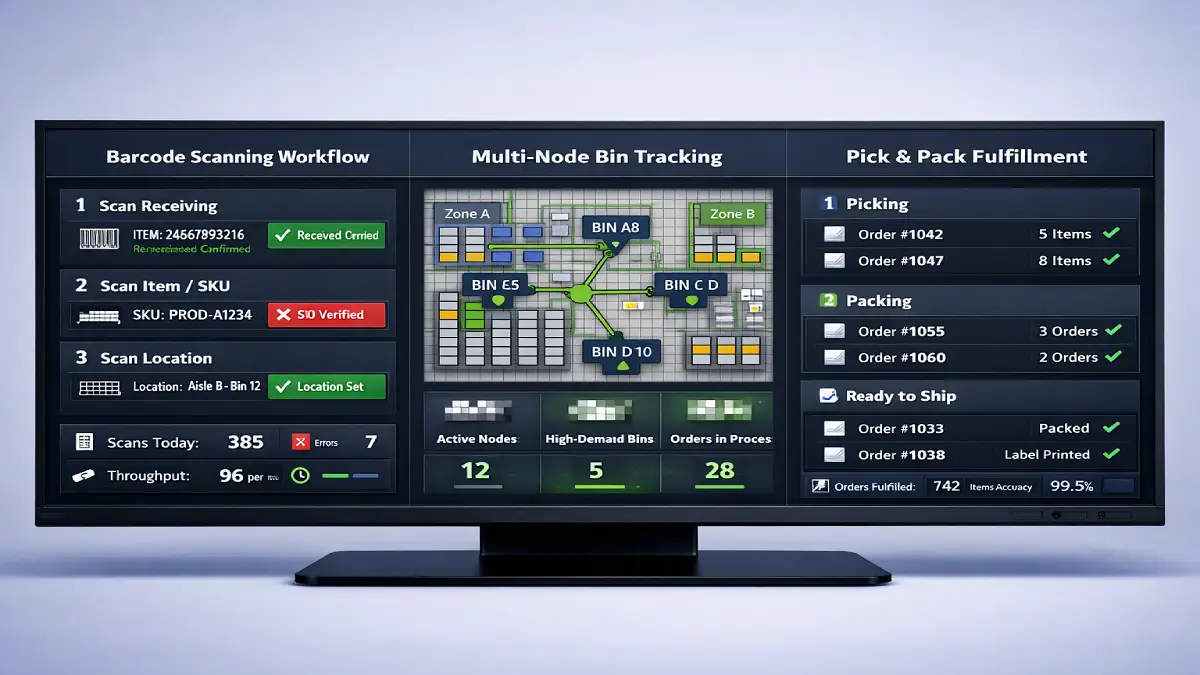
Verdict: When auditing a cloud warehouse management system (WMS), operations directors must abandon on-premise servers and paper pick-tickets. Legacy setups create devastating data silos and blind stockouts during peak seasons. Scaling eCommerce brands require a dedicated cloud inventory management platform that executes multi-node bin tracking, smart barcode scanning, and automated pick-and-pack routing with zero IT infrastructure costs.
14-Day Free Trial / No Credit Card Required →
| Platform | Core Strength | Base Pricing | ROI Verdict | Action |
|---|---|---|---|---|
| Katana Cloud | Omnichannel WMS | $179/mo | Perfect balance of mobile barcode scanning and live Shopify/WooCommerce syncing. | Try Free (14 Days) → |
| ShipHero | Direct-to-Consumer (DTC) | $1,995/mo | Enterprise-grade picking logic. Exceptional for high-volume 3PLs, but cost-prohibitive for SMBs. | Request Demo → |
| Cin7 Core | B2B & EDI Routing | ~$349/mo | Unrivaled for complex wholesale distribution across multiple geographic warehouse nodes. | View Pricing → |
Barcode Scanning and Pick-and-Pack Workflows
A true warehouse management system cloud based architecture is defined by its mobility. Warehouse staff cannot be tethered to a desktop computer. Platforms like Katana and ShipHero utilize iOS and Android applications, allowing workers to use standard smartphones or ruggedized scanners to verify bin locations. When a picker scans a barcode, the system instantly validates the item against the digital pick-ticket, reducing human picking errors to near zero.
This localized scanning data must instantly communicate with your broader ecosystem. If an item is picked and packed, the WMS pushes an immediate API payload to your cloud based order management system. This continuous synchronization ensures that your online storefronts never oversell inventory that is already boxed and sitting on the loading dock.
Multi-Node Routing and Logistics Handoff
Scaling a B2B operation requires multi-warehouse (multi-node) intelligence. If a customer in California orders a product, the software should not blindly route the fulfillment request to a facility in New York. A robust cloud WMS assesses real-time stock levels across all locations and automatically routes the order to the closest facility to minimize shipping zones and carrier costs.
- Bin and Batch Tracking: Critical for FDA compliance. The software must track exact lot numbers and expiration dates down to the specific aisle and shelf (bin location).
- 3PL Integration: If you outsource storage, your WMS must securely transmit advanced shipping notices (ASNs) to third-party logistics providers.
Finally, warehouse efficiency terminates at the shipping bay. Premium operations connect their WMS directly to their fleet management software. As soon as a pallet is loaded onto a delivery truck, the warehouse ledger closes the order and the telematics system takes over, tracking the physical delivery route until proof of delivery (POD) is signed.
Frequently Asked Questions (Real User Audits)
Is a Cloud WMS secure compared to on-premise servers?
Yes. Leading cloud WMS providers (hosted on AWS or Google Cloud) offer enterprise-grade encryption and 99.99% uptime SLAs. On-premise servers actually carry higher risks of data loss due to local hardware failure, physical damage, and the hidden costs of employing dedicated IT maintenance staff.
Does cloud warehouse software integrate with Shopify?
Absolutely. Platforms like Katana and Cin7 are built specifically for omnichannel retail. They pull sales directly from Shopify via API, allocate the inventory in the warehouse, and push the carrier tracking number back to the customer once the order is packed.
What is the difference between an OMS and a WMS?
An Order Management System (OMS) handles the financial capture of the sale across different channels (eCommerce, POS, B2B wholesale). The Warehouse Management System (WMS) strictly governs the physical movement of the goods: bin locations, barcode validation, and pallet routing.
Software Evaluation Data (Schema Profile)
- Software Category: Cloud Warehouse Management System (WMS)
- Competitors Evaluated: Katana Cloud, ShipHero, Cin7 Core
- Primary Challenge: Eliminating on-premise server costs and manual picking errors.
- Average Starting Price: $179 – $1,995 USD/Month
- Market Rating: 4.7 / 5.0 (Verified G2 Operations Reviews)
Disclaimer: Pricing structures and feature availability are based on independent B2B audits as of Q3 2026. Validate API integrations and trial limits directly on vendor sites prior to implementation.