
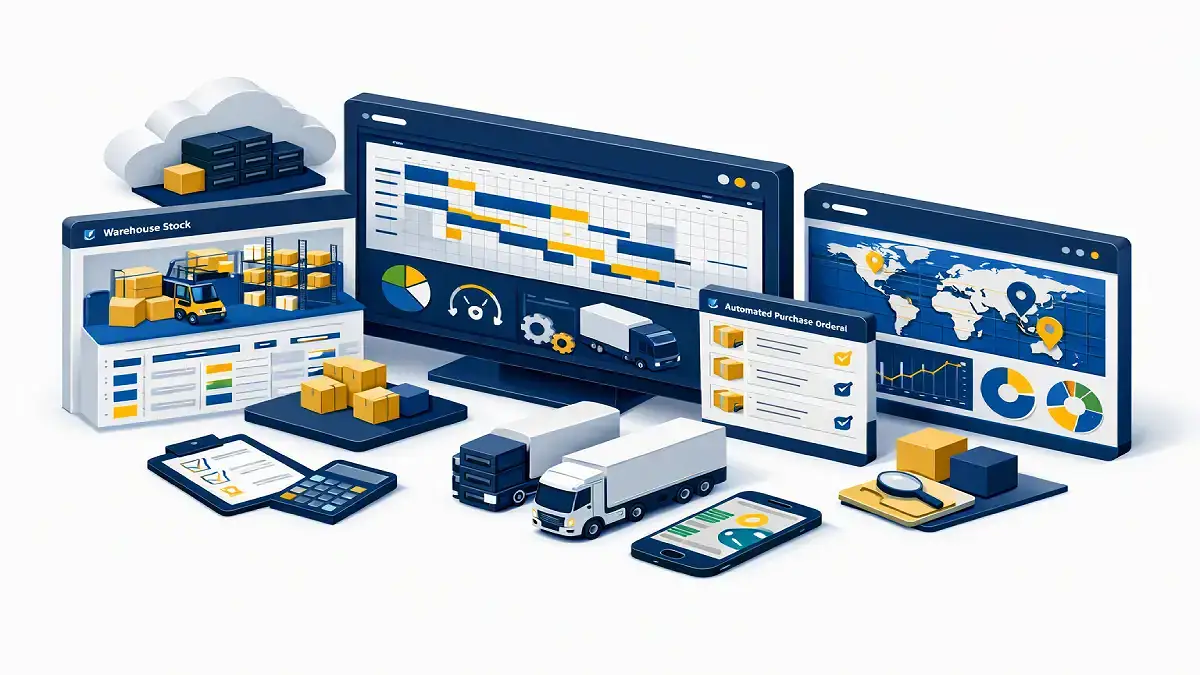
Cloud inventory management software is a centralized digital infrastructure that tracks stock levels, purchase orders, and multi-channel fulfillment in real-time.
For product-based businesses and modern manufacturers, deploying an integrated Material Requirements Planning (MRP) system eliminates manual spreadsheets and prevents stockouts. Read our hands-on evaluation of Katana MRP pricing and features, or compare the top Linnworks alternatives for e-commerce before committing to an enterprise platform.
Top Cloud Inventory & MRP Systems (2026 Operational Benchmark)
| Platform | Core Operational Focus | Primary Deployment | Bottom-Line Cost | Full Audit |
|---|---|---|---|---|
| Katana MRP | Visual Production & BOM Tracking | Cloud Native / API-First | Starts at ~$299/mo | View Pricing Audit → |
| Cin7 | Multichannel Retail & EDI Integration | Omnichannel Cloud Ecosystem | Starts at ~$349/mo | Compare vs Katana → |
| Unleashed | B2B Wholesale & Landed Costs | Cloud Stock Management | Starts at ~$349/mo | Compare vs Katana → |
| Linnworks | E-Commerce Marketplace Aggregation | Enterprise SaaS Platform | Custom Tiered Quote | View Alternatives → |
Katana: The Standard for Visual MRP & Manufacturing
For small-to-medium manufacturers, tracking raw materials (Bill of Materials) alongside finished goods is a notorious operational bottleneck. Katana strips away the complex, bloated interfaces of traditional legacy ERPs, substituting them with a real-time visual manufacturing dashboard that automatically allocates inventory to open shop orders.
Understanding the total deployment expense is essential before migrating your shop floor. Check our comprehensive breakdown on Katana MRP review and hidden costs, or evaluate its competitive tiers in our Katana MRP pricing guide.
Cin7 vs Unleashed: Multichannel & Wholesale Control
When an operation grows past single-channel sales and expands into Amazon, Shopify, and wholesale B2B distribution, stock synchronization becomes mission-critical. Discrepancies across decentralized warehouses lead directly to overselling, stockouts, and administrative overhead.
While Cin7 provides deep out-of-the-box EDI modules for enterprise retail chains, Unleashed focuses heavily on granular landed cost tracking for mid-market distributors. Compare their core architectures in our detailed Cin7 vs Katana operational comparison and see how they stack up in our Katana vs Unleashed benchmark.
Linnworks Alternatives: E-Commerce Order Routing
High-volume e-commerce brands that do not require assembly-line manufacturing often rely on Linnworks to centralize multi-marketplace shipping and inventory levels. However, rising licensing tiers and complex setup workflows have driven many operators toward leaner API-first alternatives. Review our curated shortlist of the best Linnworks alternatives for e-commerce to optimize your software spend.
Cloud WMS vs. Web-Based Inventory Systems
Upgrading from legacy on-premise servers to cloud architecture is no longer optional. But should you invest in a full-scale Warehouse Management System (WMS) or a leaner web-based tracker? A dedicated WMS handles complex bin tracking, directed putaway, and barcode scanning workflows essential for high-volume fulfillment centers.
If you manage a complex warehouse, read our 2026 hands-on test of the 5 best cloud WMS software for SMBs. For smaller operations that just need to sync Shopify with QuickBooks, compare the top web-based inventory systems to uncover hidden fees and integration costs. We also evaluated another strong competitor segment in our guide to the best alternative to Linnworks for multi-channel sellers.
B2B Buyer’s Guide: Evaluating Cloud Inventory Infrastructure
1. Native API Integrations vs. Middleware Workarounds
Never rely on third-party connectors (like Zapier) for core stock synchronization. High order volumes during peak seasons will trigger API rate limits, causing data delays and order processing failures. Always select an MRP software with native, pre-built integrations for your core accounting tools (QuickBooks / Xero) and main storefronts.
2. Accurate Landed Cost Calculation
Evaluating raw product cost alone obscures true unit profitability. Your inventory management system must automatically factor in freight fees, import tariffs, customs duties, and warehouse handling expenses to calculate precise landed costs per SKU before pushing financial data to your ERP.
3. Shop Floor Seat Pricing & License Tiers
SaaS vendors frequently lock essential capabilities—such as barcode scanning or multi-warehouse routing—behind high-tier enterprise packages. Ensure the software provides restricted “shop-floor” or “operator-only” licenses at a low per-user cost without forcing full administrative pricing for every warehouse team member.
Frequently Asked Questions (Cloud MRP & Inventory FAQs)
What is the difference between ERP and MRP software?
An MRP (Material Requirements Planning) system focuses specifically on inventory control, manufacturing schedules, raw material tracking, and bill of materials (BOM). An ERP (Enterprise Resource Planning) is a broader software suite that manages human resources, corporate accounting, CRM, and overall supply chain management.
How much does cloud inventory software cost for small businesses?
Basic cloud based inventory management systems start between $99 and $199 per month. Full-featured MRP and manufacturing platforms with shop-floor tracking and multi-level BOMs generally range from $299 to $600 per month, depending on order volume and active user seats. By adopting a modern cloud inventory system, SMBs avoid expensive on-premise server maintenance.
Can cloud inventory systems integrate directly with QuickBooks and Xero?
Yes. Leading platforms like Katana and Unleashed offer bi-directional native sync with QuickBooks Online and Xero. This automatically reconciles purchase orders, inventory asset valuations, and cost of goods sold (COGS) without requiring manual data re-entry.
Do I need a cloud warehouse management system (WMS) or basic inventory tracking?
A warehouse management system cloud based platform includes advanced features like directed putaway, barcode scanning for receiving, and multi-node bin routing. If you just sell on Shopify and fulfill from a garage or single small warehouse, a basic online stock management system is sufficient. If you run a high-volume 3PL or complex fulfillment center, you need a full WMS.